
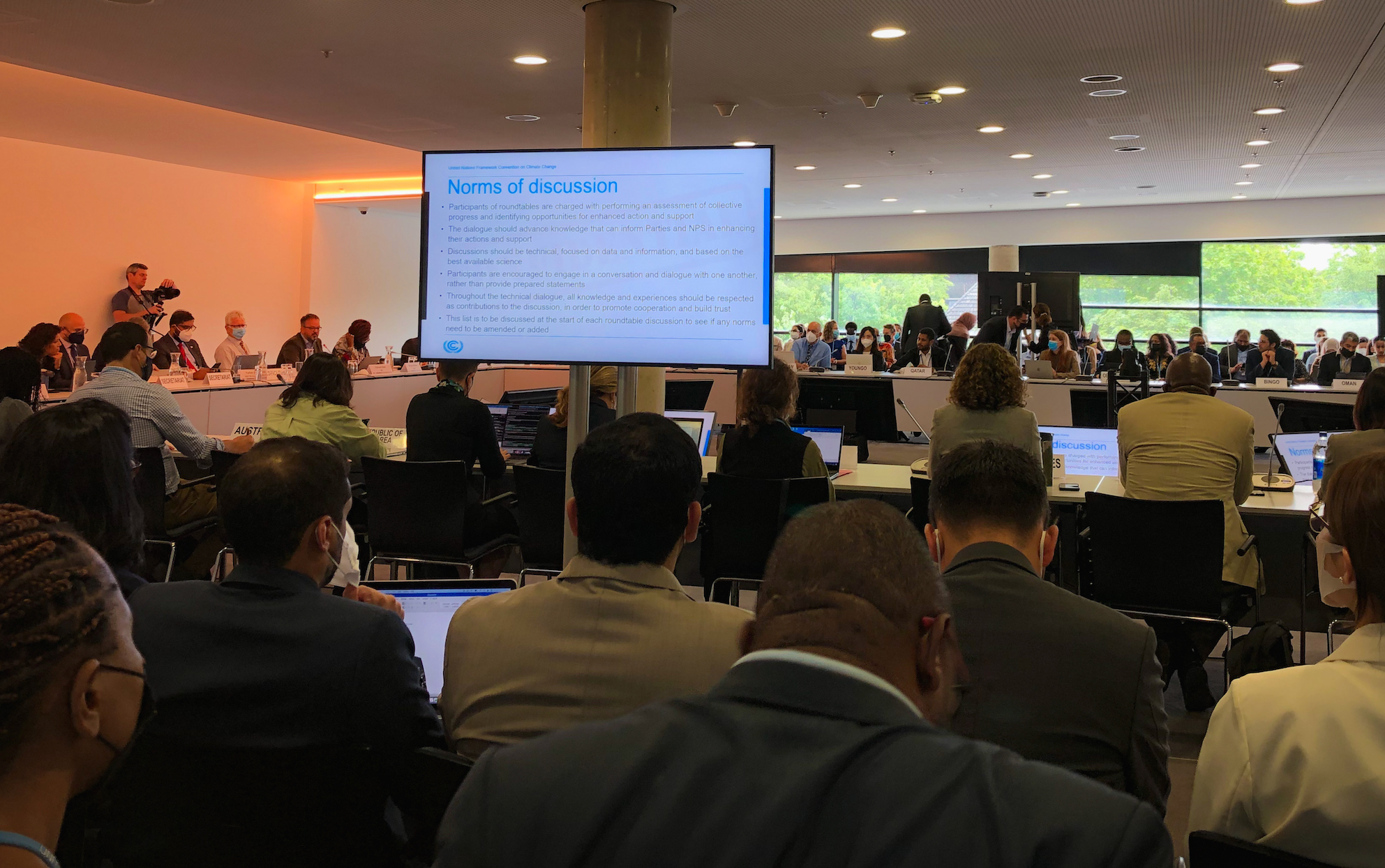
The COP29 cycle of Earth Diplomacy Leadership workshops has delivered important insights about the risks and opportunities in the Baku negotiations, and suggested a number of overarching goals that could help the process deliver better outcomes for people, nations, and the health of our planetary life-support system. The most consistent core insight is the need for negotiations and outcomes that leave behind zero-sum thinking (where if one wins the other loses), to provide multiple co-benefits all around.
At this late hour in our collective response to worsening climate disruption, this standard is fast becoming an operational imperative at the local, national, and global levels. This is not an abstraction or a wish: negotiating for mutual gains, in recognition of and leveraging the multidimensional nature of the climate challenge, can and should deliver the most vibrant economic future for countries, communities, and for enterprises at micro, small, medium, and large scales.
Among the missing ingredients is the multidimensional performance tracking that will allow decision-makers to “see” climate value and act to expand it. There is no one universal metric, but there can be overarching goals that make it possible to identify better and less useful metrics, in whatever context they are applied. For instance, setting the Global Goal on Adaptation at the highest level of ambition possible—a world without preventable climate harm to people or ecosystems—would allow all other areas of climate-related decision-making to become more ethical and more rational.
In his intervention, Carlos Alvarado—the former President of the Republic of Costa Rica and a Professor of Practice in Diplomacy at The Fletcher School at Tufts University—highlighted five concepts he considers vital to successful negotiations that go beyond zero-sum to achieve mutual gains:
- Positionality – We must be aware that we come from a position, a perspective, and that we exist in a landscape. Other perspectives will shape the consensus, and our understanding of positionality can help us attune to the best possible outcome.
- Empathy – To work toward mutual gains, it is vital to put yourself in the position of others. Get a sense of their needs and priorities and think about how to achieve them without sacrificing your own goals.
- Dualism – It is tempting to think in dichotomies, but two-sided thinking reinforces the zero-sum equation and makes it more difficult to think toward mutual gains. It is also less factual; the world is complex, and layered, and every perspective provides a new way of viewing the landscape.
- History – Historical events lead to decisions that give us the institutions we inherit. The United Nations emerged from the 2nd World War, which itself emerged from the aftermath of the 1st World War. The Convention aims to rectify historical errors, and gives structure to the negotiations. Learn from history; avoid repeating dangerous mistakes.
- Leadership – Leadership is the opposite of inertia; it is the example of forward progress, and is achieved by bringing together the four areas of recognition and collaboration. The Paris Agreement embodies and invites leadership for cooperative achievement of mutual gains.

In Baku, negotiators will need to grapple with a number of serious challenges:
- Far more money needs to move into climate risk mitigation and resilience building. That includes decarbonization and technological innovation efforts, as well as adaptation measures and focused, constructive, persistent responses to climate-related loss and damage.
- Governments, and non-governmental actors, especially in the private sector, need to get beyond talk, beyond pledges, to action and implementation. Delivery of resources, capacities, innovations, and outcomes, needs to be central to what is agreed in Baku.
- This will require institutional innovation, to allow more intergovernmental processes to follow the Paris Agreement mandate to work across conventions and thematic areas, across sectors and regions, to foster active, everyday climate-resilient pollution-free development.
Dr. Mihaela Papa—Director of Research and Principal Research Scientist at the Center for International Studies at MIT and a Senior Fellow at The Fletcher School at Tufts University—presented the intricacies and background of careful work needed to negotiate effectively for mutual gains. We highlight three points here:
- What is your BATNA—your best alternative to a negotiated agreement? In other words, what can you do that will provide next-best outcomes, if you don’t have agreement among all parties to work together? With the climate, it quickly becomes apparent you need others to do their part, or heroic efforts could still be swamped by rapidly worsening climate disruption.
- She also shared the four pillars of the Mutual Gains Approach: 1) Prepare, 2) Create value, 3) Distribute value, and 4) Follow through. As you go through these in sequence, you can see they not only foster mutual gains but they build trust, which is crucial to securing follow-through and cooperation from others.
- Dr. Papa also noted the value of silence. Evidence shows more senior negotiators with a track record of success use silence strategically, and often speak less. This provides space for listening, retaining frames and aims, and coming close to a workable consensus.
We dedicated an entire session to enhancing multilateral cooperation and highlighted the potential of “non-market approaches” in line with Article 6.8 of the Paris Agreement to transition mainstream trade and finance to climate-smart standards and practices.
Prof. Mizan Khan—a long experienced negotiator for Bangladesh and the Least Developed Countries, on faculty at Brown University—noted the important practical reality of vulnerability interdependence: the failure of any nation to both mitigate and adapt at the speed and scale required will create risks and costs for everyone else. This interdependence is an opportunity.
This echoed the discussions we have had regarding The Illusion of Immunity. While historically, it has been possible to say the United States and other wealthy countries can absorb the massive costs of severe climate impacts, the costs of individual events are starting to be measurable as percentages of total GDP, even in the world’s largest economy. One recent storm, Hurricane Helene, is now estimated to eventually generate traceable costs of $250 billion. For perspective, that is roughly 30% of the entire US Defense budget and two-thirds of the total amount the US Inflation Reduction Act is projected to invest in clean energy over ten years.
Dr. Nfamara Dampha—Lead Research Scientist in Natural Capital and Ecosystem Services at the University of Minnesota Institute on the Environment and a member of the Natural Capital Project (NatCap) Leadership Team, who also represents Gambia in the UNFCCC negotiations—highlighted the importance of the UAE-Belem Work Programme on Indicators, which starts from 11 overall targets for measuring progress on the Global Goal on Adaptation and has now gathered input on more than 7,000 potential indicators.
Dr. Dampha also added the very clear, essential insight that the least developed, lowest emitting, and most vulnerable countries, should never have to borrow money for disaster response or adaptation, that grant-based finance is most appropriate, ethical, and effective, in such cases.
The COP29 cycle of Earth Diplomacy Leadership workshops left us with new clarity around key areas of need in the global climate negotiations, in particular:
- On Finance: We need not only a high enough number for the global collective climate finance goal; we also need new mechanisms that are genuinely actionable, that can mobilize resources quickly, and that will help to reverse the unjust pattern of punishing debt falling on countries that did not create the climate crisis they now must address.
- Inclusion is efficiency: More tools and practices are needed, along with actionable multilateral agreements, to pry open the high-level spaces where big national and international decisions are made. Robust, ongoing stakeholder engagement adds local insight and helps climate crisis response strategies to be rooted, relevant, and replicable.
- Design to transcend crisis: Are we aiming too low? The Global Goal on Adaptation could set everyone’s eyes on the highest ambition possible, by focusing on a future in which no people and no ecosystems suffer climate damage. Energy transition, industrial systems innovation, and community resilience, can all be part of a zero harm goal.
- Assess threats honestly: Are we paying enough close attention to the real-world risks we are facing? If you’re on the Titanic, you need to know precisely where and how big the iceberg is. All countries, communities, and companies, need distilled, actionable data, so they can make clearer choices about what they need day to day and long term.
Follow the Earth Diplomacy Leadership Initiative at EarthDiplo.org
Further reporting and resources


